
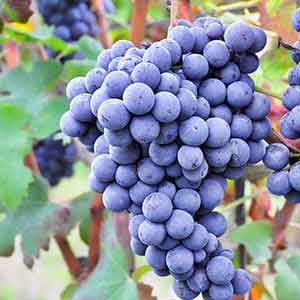
Nebbiolo
Rarely grown outside of Italy’s Piedmont region, Nebbiolo produces some of Italy’s best red wines. Due to these limited plantings outside of Piedmont, Nebbiolo tends to be an undervalued grape and largely unknown on the world stage.
In Piedmont’s Barolo and Barbaresco regions, the Nebbiolo grape flourishes and expresses the terroir of the area. Showcasing the unique growing conditions and soil types, producing Nebbiolo in these areas results in beautifully complex reds that positively benefit from barrel and extended bottle ageing. The best examples are long-lived and beautifully scented, revealing aromas of tar, violets, roses, and chocolate.
Nebbiolo’s thick-skinned grapes need plenty of sunshine to ripen fully. As a result, when young, the wines are robust and tannic, and require a minimum of five years in bottle to soften the gripping tannins. These days however, many winemakers are making Nebbiolo wines that are more approachable and ready to drink at a much younger age.